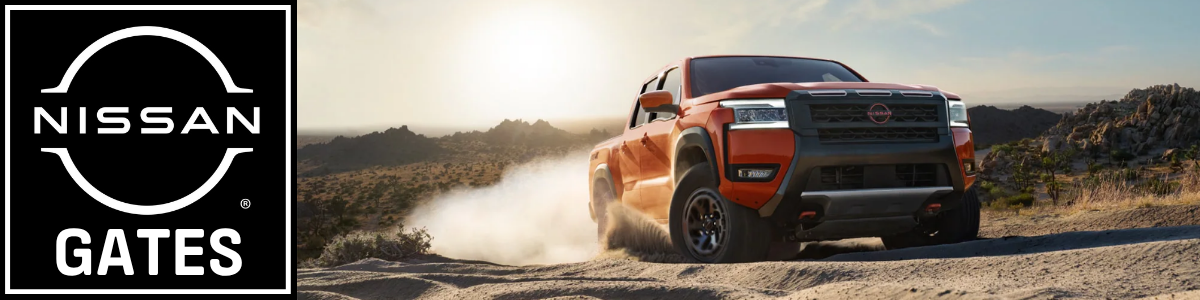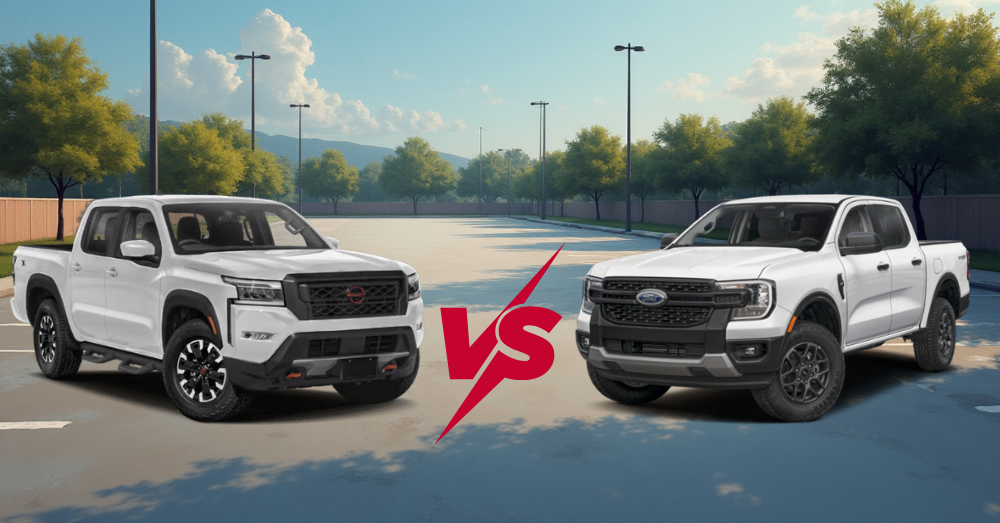


How Much Weight Every 2026 Frontier Configuration Can Pull Ask three Frontier owners how much their truck pulls and you'll probably hear three different numbers. All of them can be right. Nissan builds this midsize pickup in enough cab, bed, and drivetrain combinations that the trailer rating swings by almost 900 pounds across the lineup. Every 2026 Frontier runs the same 310-horsepower 3.8-liter V6 and 9-speed automatic, so trim never changes the engine. Ratings run from 7,150 pounds in the King Cab S 4x2 down to 6,270 pounds in the PRO-4X Crew Cab Long Bed 4x4. Cab style, bed length, and drivetrain move the number far more than the badge on the tailgate does. One Engine, Eleven Different Answers Nissan keeps things simple under the hood. A 3.8-liter direct-injection V6 rated at 310 horsepower at 6,400 rpm and 281 lb-ft of torque at 4,400 rpm powers every grade, backed by a 9-speed automatic. No four-cylinder base engine, no diesel, no hybrid to sort through. So why does the Nissan Frontier towing capacity move around so much? Weight. Each build carries a different curb weight, and whatever the truck weighs is the weight the powertrain isn't using to pull a trailer. Cab and Bed Move the Needle Most The highest rating in the lineup belongs to the least expensive truck. A King Cab S 4x2 with the 6-foot bed is rated at 7,150 pounds. Slide over to a Crew Cab S 4x2, and you're at 7,070, which costs you 80 pounds for two extra doors and a fifth seat. Stretch out to the Crew Cab Long Bed in SV trim, and the 4x2 rating settles at 6,920 pounds. Longer trucks ride better behind a trailer, but that extra length shows up on the scale, too. What Four-Wheel Drive Costs on Paper Adding 4x4 shaves 110 to 160 pounds off the trailer rating across the board. King Cab S drops from 7,150 to 7,000. Crew Cab S goes from 7,070 to 6,960. SV Long Bed slides from 6,920 down to 6,760. The transfer case, front driveshaft, and the rest of the four-wheel-drive hardware all add to curb weight. Payload takes an even bigger hit. That same King Cab S gives up 160 pounds of payload moving from 4x2 to 4x4, dropping from 1,590 to 1,430. Tongue weight counts against payload rather than towing, so watch that column closely. The PRO-4X Trades Numbers for Trail Hardware PRO-4X buyers give up the most on the spec sheet, and they usually know it going in. Bilstein off-road shocks, an electronic locking rear differential, skid plates over the oil pan and fuel tank, and 265/70R17 all-terrain tires all weigh something. A PRO-4X Crew Cab 4x4 with the 5-foot bed tows 6,680 pounds. Order the Long Bed version, and it lands at 6,270, the lowest figure Nissan publishes for 2026. PRO-X, a 4x2 grade with a similar look, rates at 6,900 pounds. 2026 Nissan Frontier Towing and Payload by Trim Grade Cab and Bed Drivetrain Max Towing Max Payload EPA City / Hwy / Comb S King Cab, 6-foot bed 4x2 7,150 lbs 1,590 lbs 19 / 24 / 21 mpg S King Cab, 6-foot bed 4x4 7,000 lbs 1,430 lbs 17 / 21 / 19 mpg S Crew Cab, 5-foot bed 4x2 7,070 lbs 1,490 lbs 19 / 24 / 21 mpg S Crew Cab, 5-foot bed 4x4 6,960 lbs 1,330 lbs 17 / 21 / 19 mpg SV Crew Cab, 5-foot bed 4x2 7,000 lbs 1,480 lbs 19 / 24 / 21 mpg SV Crew Cab, 5-foot bed 4x4 6,880 lbs 1,310 lbs 17 / 21 / 19 mpg SV Crew Cab Long Bed, 6-foot 4x2 6,920 lbs 1,400 lbs 19 / 24 / 21 mpg SV Crew Cab Long Bed, 6-foot 4x4 6,760 lbs 1,200 lbs 17 / 21 / 19 mpg PRO-X Crew Cab, 5-foot bed 4x2 6,900 lbs 1,430 lbs 19 / 24 / 21 mpg PRO-4X Crew Cab, 5-foot bed 4x4 6,680 lbs 1,220 lbs 16 / 20 / 18 mpg PRO-4X Crew Cab Long Bed, 6-foot 4x4 6,270 lbs 1,100 lbs 16 / 20 / 18 mpg Towing and payload figures are maximums for properly equipped 2026 Frontier models as published by Nissan. Actual capacity varies with options and equipment. Check the Window Sticker Before You Hitch Up One detail trips people up at the lot. The Class IV tow hitch receiver and its wiring aren't standard on any 2026 Frontier, and Nissan doesn't offer them from the factory on the S grade at all. They come bundled in the SV Convenience Package or the PRO Convenience Package on PRO-X and PRO-4X. Tow-Haul Mode follows the same pattern, standard on the PRO grades and packaged on SV. Trailer Sway Control is standard on SV and PRO grades, while hill start assist shows up on every truck. Picking a Frontier That Matches Your Trailer Pulling a bass boat, a pair of jet skis, or a utility trailer under 4,000 pounds? Any Frontier in the lineup handles that load without breaking a sweat. Shopping a travel trailer in the 5,500 to 6,500 range tightens things up, and that's where the 4x2 builds earn their keep with a little breathing room left over. Four-wheel drive for a slick boat ramp or a muddy Kentucky job site narrows the field. Most 4x4 builds land between 6,760 and 7,000 pounds, while the PRO-4X drops to 6,680 with the short bed and 6,270 with the long one. The largest number Nissan publishes is for the King Cab S 4x2, which also happens to be the least expensive Frontier on the lot. See the Frontier Lineup in Person at Gates Nissan Numbers on a page only go so far. We stock Frontier trucks in a mix of cab styles, bed lengths, and drivetrains at our Richmond store, and the fastest way to settle a towing question is to read the door jamb sticker on the truck you're actually considering. Our team can point out which packages add the Class IV hitch receiver and Tow-Haul Mode, then let you compare a 4x2 against a 4x4 back-to-back. Bring your trailer's weight numbers along, and we'll steer you toward a build with room to spare. Our service department can add a hitch receiver later if the right truck shows up without one.
Nissan Pathfinder Rock Creek: Trim Breakdown and Off-Road Specs
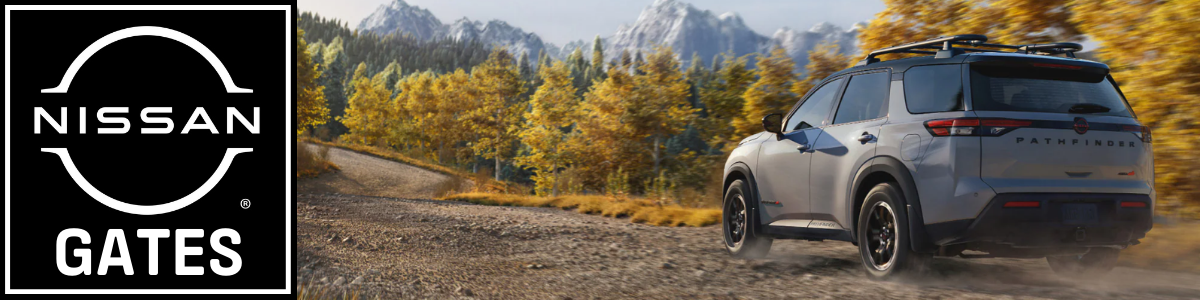
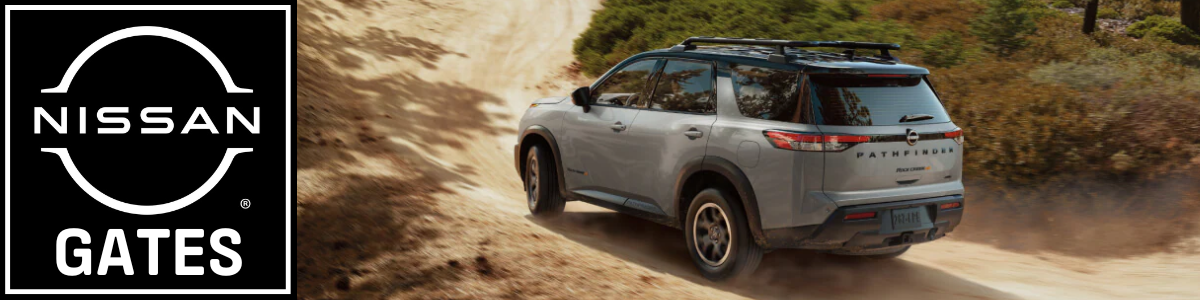
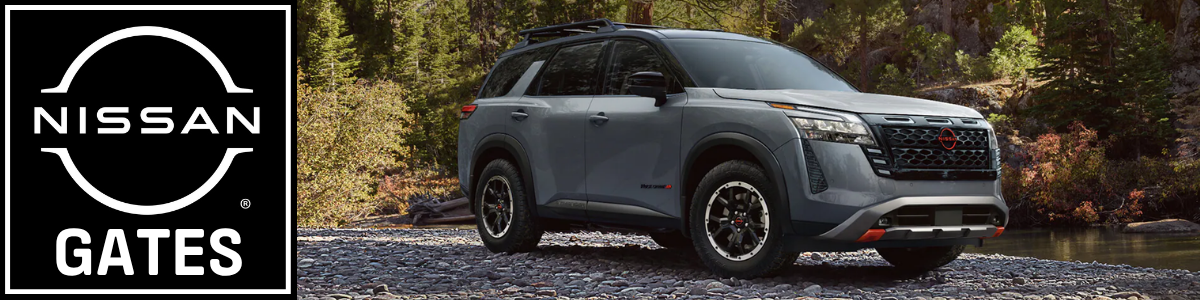
The 2026 Pathfinder Rock Creek Trades Chrome for Trail Tires Most three-row SUVs treat gravel like a rumor. Rock Creek is the one Pathfinder that shows up ready for it, with all-terrain tires, a lifted suspension, a real roof rack, and an engine tune the other trims don't get. Here's how it slots into the 2026 lineup and what you're actually paying for. The Rock Creek is 4WD only, starts at $45,090 before destination, and sits $500 above the SL 4WD in Nissan's December 2025 pricing. It's the only 2026 Pathfinder rated at 295 horsepower and 270 lb-ft of torque, and the only one that calls for premium unleaded. Ground clearance rises to 7.7 inches, approach angle jumps to 18.8 degrees, and 6,000-pound towing comes standard with no package required. See the Hardware Up Close Nissan's walkthrough covers the bumpers, the rack, the tires, and the interior details that separate this grade from the rest of the lineup. Shop Rock Creek inventory Where the Rock Creek Sits in the 2026 Lineup Nissan sells the 2026 Pathfinder in five grades, opening with the entry-level S. Above it, SV starts at $39,990 with front-wheel drive or $41,990 with Intelligent 4x4. SL runs $42,590 in 2WD and $44,590 in 4WD. Platinum tops the range at $49,790 and $51,790. Rock Creek lands at $45,090 and skips the 2WD option entirely. All prices exclude destination, and the chart below compares the four grades most Rock Creek shoppers cross-shop. So you're paying $500 above an SL 4WD, and the two trims spend that money very differently. An SL gets TailorFit seats, a 12.3-inch digital gauge cluster, and a heated steering wheel as standard. Rock Creek puts its budget into hardware you can feel on a washboard road. What Makes the Nissan Pathfinder Rock Creek Different Start with the stance. Nissan lists the Rock Creek at 73.7 inches tall, versus 70.9 inches for the other grades, and the minimum ground clearance climbs from 7.1 to 7.7 inches. Its suspension is the only off-road-tuned setup in the Pathfinder family. Those changes push the approach angle from 15.6 to 18.8 degrees, the departure from 20.9 to 22.8 degrees, and the breakover from 15.6 to 19.3 degrees. On a rutted farm lane outside Berea, that's the difference between scraping a bumper and rolling through. The Nissan Pathfinder Rock Creek rides on 265/60R18 all-terrain tires wrapped around 18-inch black beadlock-style wheels. Every other grade wears all-season rubber. Up top, you get a fixed black tubular roof rack rated for 220 pounds. LED fog lights, Rock Creek-styled bumpers, a black grille with mesh inserts, and black badging with Lava Red accents round out the exterior. Inside, the seats use a water-repellent leatherette with cloth inserts, Rock Creek embroidery on the front seats, and Lava Red contrast stitching. The Only Pathfinder With Extra Horsepower All four grades in the chart share the same 3.5-liter V6 and nine-speed automatic with paddle shifters. Rock Creek gets its own tune, though. Nissan rates it at 295 horsepower at 6,400 rpm and 270 lb-ft of torque at 4,800 rpm, compared with 284 and 259 for SV, SL, and Platinum. That extra output asks for a different pump. Nissan recommends premium unleaded for the Rock Creek and regular for the rest of the lineup. Intelligent 4x4 comes standard, and with it a seven-position drive and terrain selector covering Auto, Eco, Tow, Sport, Sand, Mud, and Rut. Hill Descent Control is included on every 4WD Pathfinder, and it earns its keep on a wet Kentucky ridge road. Towing is where the Rock Creek quietly saves you money. Its Class III hitch, trailer harness, and transmission oil cooler are standard, so you get the full 6,000-pound rating without adding a package. An SV or SL owner needs the Premium Package to get there. Fuel economy takes a hit. EPA estimates for the Rock Creek are 20 mpg city, 23 highway, and 21 combined, against 23 combined for an SV or SL 4WD. Two mpg is a fair trade for the tires and the extra power, but you should know it's there. Inside the Cabin and the Premium Package Rock Creek shares the big 2026 tech upgrades with the rest of the lineup. A 12.3-inch touchscreen with wireless Apple CarPlay and Android Auto is standard, and so are heated front seats, an eight-way power driver's seat, and Nissan Safety Shield 360. HD Intelligent Around View Monitor with Front Wide View and Invisible Hood View comes standard on Rock Creek, SL, and Platinum, and it's handy for placing tires on a trail. Two things to know. Rock Creek keeps the 7-inch driver display rather than the SL's 12.3-inch digital cluster, and it seats eight with a bench as standard. New for 2026, the Rock Creek Premium Package adds a panoramic moonroof, wireless phone charging, a heated steering wheel, second-row temperature controls, and a 12-volt cargo outlet for $2,000 with the bench or $2,600 with captain's chairs. Cargo space matches every other trim at 16.6 cubic feet behind the third row, 45.0 cubic feet behind the second row, and 80.5 cubic feet with both rear rows folded. Where the Rock Creek Earns Its $500 If your weekends involve a boat ramp, a hunting lease, or a gravel driveway that turns to soup every March, the Rock Creek is the easy pick. Standard towing hardware, better angles, and tires that don't flinch at mud, all for $500 over an SL 4WD. If most of your miles are I-75 and school pickup, the SL's quieter all-season tires, digital cluster, and regular-fuel diet make more sense. 2026 Nissan Pathfinder 4WD Trim Comparison Chart Feature SV 4WD Rock Creek 4WD SL 4WD Platinum 4WD Starting MSRP (excl. destination) $41,990 $45,090 $44,590 $51,790 2WD Available Yes ($39,990) No Yes ($42,590) Yes ($49,790) Engine 3.5L V6 3.5L V6 (Rock Creek tune) 3.5L V6 3.5L V6 Horsepower 284 @ 6,400 rpm 295 @ 6,400 rpm 284 @ 6,400 rpm 284 @ 6,400 rpm Torque 259 lb-ft @ 4,800 rpm 270 lb-ft @ 4,800 rpm 259 lb-ft @ 4,800 rpm 259 lb-ft @ 4,800 rpm Recommended Fuel Regular unleaded Premium unleaded Regular unleaded Regular unleaded Transmission 9-speed automatic w/ paddles 9-speed automatic w/ paddles 9-speed automatic w/ paddles 9-speed automatic w/ paddles EPA Fuel Economy (city/hwy/combined) 21 / 26 / 23 mpg 20 / 23 / 21 mpg 21 / 26 / 23 mpg 20 / 25 / 22 mpg Suspension Standard Off-road-tuned, lifted Standard Standard Minimum Ground Clearance 7.1 in 7.7 in 7.1 in 7.1 in Overall Height 70.9 in 73.7 in 70.9 in 70.9 in Approach / Departure / Breakover Angles 15.6° / 20.9° / 15.6° 18.8° / 22.8° / 19.3° 15.6° / 20.9° / 15.6° 15.6° / 20.9° / 15.6° Tires 255/60R18 all-season 265/60R18 all-terrain 255/60R18 all-season 255/50R20 all-season Wheels 18-in painted alloy 18-in black beadlock-style alloy 18-in machined alloy (20-in optional) 20-in machined alloy Max Towing 3,500 lb (6,000 lb w/ SV Premium Package) 6,000 lb standard 3,500 lb (6,000 lb w/ SL Premium Package) 6,000 lb standard Class III Hitch and Trailer Harness Optional Standard Optional Standard Drive and Terrain Mode Selector 7-position 7-position 7-position 7-position Hill Descent Control Standard Standard Standard Standard Roof Rack Black rails Black tubular rack, 220-lb capacity Black rails Black rails LED Fog Lights Not available Standard Not available Not available Seat Material Cloth Water-repellent leatherette w/ cloth inserts TailorFit Semi-aniline leather Seating Capacity 8 8 (7 w/ Premium Package captain's chairs) 8 (7 w/ Premium Package captain's chairs) 8 (7 w/ Captain's Chairs Package) Driver Display 7-in 7-in 12.3-in digital 12.3-in digital + head-up display Touchscreen 12.3-in, wireless CarPlay/Android Auto 12.3-in, wireless CarPlay/Android Auto 12.3-in, wireless CarPlay/Android Auto 12.3-in, wireless CarPlay/Android Auto HD Intelligent Around View Monitor Not available Standard Standard Standard Heated Steering Wheel Optional (SV Premium Package) Optional (Rock Creek Premium Package) Standard Standard Wireless Phone Charging Optional (SV Premium Package) Optional (Rock Creek Premium Package) Standard Standard Panoramic Moonroof Optional Optional Optional Standard Audio 6 speakers 6 speakers 6 speakers (13-speaker Bose optional) 13-speaker Bose Cargo Volume (behind 3rd / 2nd / 1st row) 16.6 / 45.0 / 80.5 cu ft 16.6 / 45.0 / 80.5 cu ft 16.6 / 45.0 / 80.5 cu ft 16.6 / 45.0 / 80.5 cu ft Pricing and specifications from Nissan's 2026 Pathfinder press kit, with pricing dated December 22, 2025, and from nissanusa.com. MSRP excludes destination, tax, title, and license. Nissan's press kit and its online specs page do not agree on every figure. Where they differ, the chart follows the press kit, including the Rock Creek's 73.7-inch overall height, which the online specs page lists as 70.9 inches for every grade. Confirm figures on the specific vehicle before you buy. Put the Rock Creek's Tires on Real Dirt at Gates Nissan Reading angle numbers is one thing. Feeling the extra ride height on the way out of a gravel lot is another. We keep the Pathfinder Rock Creek alongside the SV, SL, and Platinum here at Gates Nissan in Richmond, so you can drive a Rock Creek and an SL 4WD back-to-back and decide whether the tires and tow hardware are worth the $500. Our team can walk you through the Premium Package, help you pick between the bench and the captain's chairs, and pull up current offers. Bring your questions. We're glad to answer them without the pressure. Frequently Asked Questions Does the 2026 Pathfinder Rock Creek come in 2WD? No. The 2026 Pathfinder Rock Creek is 4WD only and comes with Nissan's Intelligent 4x4 system, a seven-position drive and terrain selector, and Hill Descent Control as standard equipment. SV, SL, and Platinum each offer a 2WD option. Does the Rock Creek require premium fuel? Nissan lists premium unleaded as the recommended fuel for the Rock Creek, which is tuned for 295 horsepower and 270 lb-ft of torque. The other Pathfinder grades run on regular unleaded. How much can the 2026 Pathfinder Rock Creek tow? Up to 6,000 pounds when properly equipped. The Rock Creek includes the Class III tow hitch, trailer harness, and transmission oil cooler as standard, while SV and SL need a Premium Package to reach the same rating. What comes in the Rock Creek Premium Package? The package adds a panoramic moonroof, wireless phone charging, a heated steering wheel, a second-row temperature control panel, and a 12-volt outlet in the cargo area. Nissan's December 2025 pricing lists it at $2,000 with the bench seat or $2,600 with second-row captain's chairs. Drive the Rock Creek and an SL Back-to-Back Five hundred dollars separates them on paper. Ten minutes in each settles which one belongs in your driveway. Shop Rock Creek inventory Contact our team